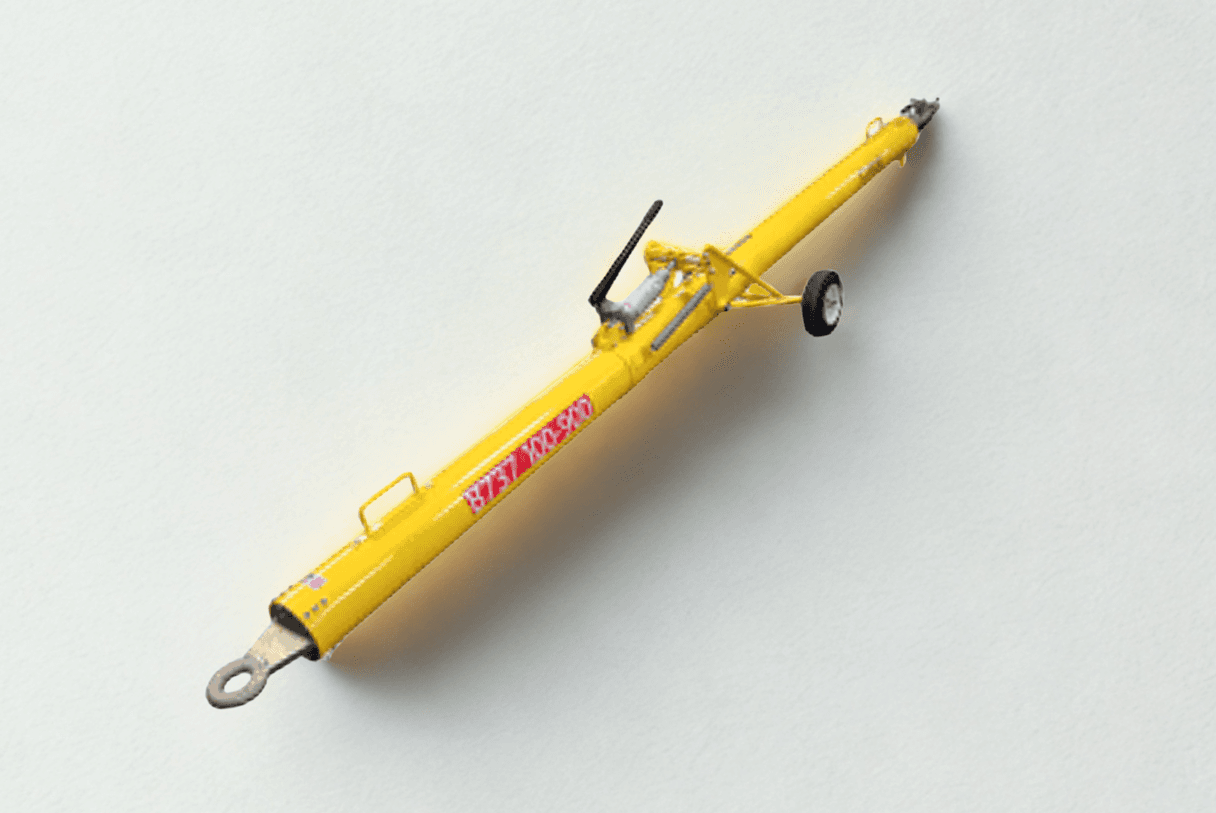
The right aircraft tow bar fits the aircraft’s designated towing attachment, couples correctly to the tug and is rated for the intended move. Those three checks apply whether you need an aircraft pushback towbar for daily gate operations or a portable towbar for occasional hangar moves.
Use this aircraft tow bar selection guide to compare fixed, multi-head and portable options and identify what to include in your equipment enquiry. Jetsys Defence offers configurations for business jets, regional and narrow-body aircraft, with options for select wide-body applications on request. Explore Jetsys Defence aircraft tow bars.
Aircraft Tow Bar Selection Checklist
Aircraft Model, Variant and Towing Attachment
Record the aircraft make, model and exact variant, then check its maintenance or operating documentation for the designated towing attachment. For a nose landing gear connection, identify the fitting the tow head must engage. For a tailwheel towbar, verify the specified tailwheel attachment. A Cessna 172 tow bar for light-aircraft handling and a 737 towbar for gate pushback both require a variant-level fit check.
Tow Head and Aircraft Compatibility
To choose the right towbar head for an aircraft, confirm the head part number, the attachment geometry and the locking arrangement. For an interchangeable head, also verify the matching bar body and specified shear pins. Record the full combination in your aircraft towbar compatibility chart so engineering, ground operations and stores can identify the same configuration.
Tow Tractor Hitch, Tow Eye and Coupling Height
To match a towbar to an aircraft tug, record the tug make and model, hitch type, coupling pin dimensions and hitch height. Compare these with the tow eye’s internal diameter, thickness and documented coupling height range. Check that the hitch can articulate through the required turns and changes in slope without binding or contacting the bar.
Aircraft Towing Limits and Tow Bar Capacity
Check the aircraft’s weight against the permitted towing weight for the intended move. Then compare the towbar assembly’s rated push and pull forces with the application requirements and verify that the tug is suitable for the aircraft and conditions. The aircraft’s weight affects how much force the move requires, along with factors such as the slope and surface conditions.
Towing Frequency, Route and Operating Conditions
List the number of moves per shift, typical towing distance, tight turns, gradients, surface conditions and exposure to weather. A shared bar that switches aircraft several times per day has different handling and storage needs from a dedicated pushback unit or a portable towbar carried between bases. Share the actual duty cycle when requesting a configuration.
How an Aircraft Tow Bar Works
Tow Head, Bar Body and Towing Eye
The aircraft towbar head engages the designated aircraft fitting. The bar body transfers push and pull forces, and the towing eye couples the assembly to the tug. On a multi-head unit, the connection between the body and the interchangeable head is also part of the specified load path.
Locking Mechanisms and Retaining Pins
The head latch secures the aircraft connection. Depending on the design, a separate retaining pin or lock secures the interchangeable head to the bar body. Ask how the operator verifies full engagement and which stops, pins or indicators the equipment instructions specify for that assembly.
Shear Pins and Overload Protection
Aircraft towbar shear pins are designed to fail at a specified load to help limit the forces transmitted to the aircraft attachment. Some designs specify separate protection for push–pull and turning loads. Confirm the specified pin part number for the configuration and include matching spares in the order.
Handling Wheels and Height Adjustment
An undercarriage supports the towbar during positioning, reducing the weight the crew has to handle. Where a height-adjustable assembly is available, check its adjustment range at both ends of the bar and confirm how the wheels are secured or positioned during the move.
Aircraft Tow Bar Types and Configuration Options
Fixed and Aircraft-Specific Tow Bars
A fixed tow bar has a dedicated head. It suits operations that frequently move one aircraft variant or use the same approved interface across a fleet. An aircraft-specific towbar gives crews a readily identifiable configuration and removes the need for head changes between compatible moves.
Multi-Head Tow Bars for Mixed Fleets
A multi-head aircraft towbar uses a shared body with interchangeable heads for documented aircraft configurations. This can reduce the number of complete bars stored at a station. When a unit is described as a universal aircraft towbar, ask for the compatibility list and check whether each aircraft requires a different head, adapter or shear pin set.
Portable and Fly-Away Tow Bars
A portable aircraft towbar is useful for occasional positioning, remote-base work or operations with limited storage. A fly-away aircraft towbar places added emphasis on packed size and weight. If the equipment will travel on board, confirm the stowage and restraint arrangements as well as the towing application and rating.
Custom Tow Bars and Snap-Back Options
Jetsys Defence offers custom tow bars with project-specific geometry, material, finish and handling wheels. An optional snap-back design absorbs energy to help reduce transient loads. Ask whether it suits your aircraft and towing duty, and check the specified geometry and load limits for the complete configuration.
Fixed vs Multi-Head Tow Bars
Scroll to see all columns
| Selection factor | Fixed tow bar | Multi-head tow bar |
|---|---|---|
| Fleet profile | Repeated moves with the same documented interface | Multiple documented aircraft configurations at one station |
| Day-to-day setup | Dedicated head stays with the bar | Crew selects and verifies the head and pins for the aircraft |
| Equipment planning | Separate complete bars where interfaces differ | Shared body plus compatible heads, pins and head storage |
Conventional Tow Bars vs Towbarless Tugs
A conventional arrangement uses a tug, a tow bar and the aircraft’s designated attachment. A towbarless tug typically cradles or lifts the nose wheels directly. Compare the equipment against the aircraft variant and the specific move, because the permitted combinations can differ for gate pushback, hangar towing and other ground movements.
Applications and Industries Served
Airlines and Ground Handlers — Gate Pushback and Apron Repositioning
For frequent gate pushback, look for a configuration that can be identified quickly, connects to the assigned tug and has the specified replacement parts available. A mixed terminal operation can benefit from interchangeable heads where the complete assembly is documented for each fleet type.
Business Aviation and MRO — Hangar and Maintenance Towing
For business aviation and maintenance, repair and overhaul (MRO) facilities, check door clearances, turning space and undercarriage manoeuvrability. Workshops that handle several business jet types should also confirm which head and bar combinations are permitted for each aircraft and maintenance move.
Defence Aviation and Aircraft Manufacturers — Flight-Line Moves and Aircraft Trials
Flight-line and aircraft trial programmes can involve non-standard geometry or project-specific documentation. Give Jetsys Defence the aircraft interface requirements, applicable ground movement limits and expected duty so the quoted configuration reflects the actual application.
Technical Specifications to Compare
Aircraft Compatibility and Tow Head Part Numbers
Ask for written applicability by aircraft model and variant. Identify the bar body, the tow head and any adapters or pins by part number. If you maintain an aircraft towbar compatibility chart, record the relevant equipment documentation revision and any restrictions for each entry.
Rated Push–Pull Force and Towing Limits
Compare the documented push and pull ratings for the quoted assembly in the same units, typically kilonewtons (kN). Check which head, body and coupling the figures apply to. Record the shear-pin rating separately, along with any limits specified for the aircraft and towing task.
Tow Eye Dimensions, Coupling Height and Overall Length
Use the configuration drawing to verify tow eye dimensions, coupling height and overall bar length. Compare the bar’s working envelope with the tug and aircraft, including clearances at the sharpest permitted turn and at changes in ramp gradient.
Tow Bar Weight, Materials and Protective Coatings
Compare assembled weight and, for multi-head configurations, the weight of each removable head. Jetsys Defence offers project-specific steel or aluminium construction. If the equipment will be stored outdoors or exposed to hydraulic fluids, ask which corrosion and fluid resistance properties are specified for the finish.
Wheel Assemblies, Storage and Transport Options
Check wheel size, bearings and how the undercarriage is supported during positioning. For equipment shared between bays or stations, confirm packed dimensions and whether a rack or transport trolley can be included. For a multi-head system, assign storage positions that make the correct head easy to identify.
Manufacturing Quality and Buying Considerations
Configuration Documentation and Part Traceability
Request a configuration drawing, an identification or parts list, and the operating and maintenance instructions for the quoted build. Confirm how the bar and its replaceable components are identified so your team can match a replacement head, latch or shear pin to the correct assembly.
Manufacturing Inspection and Factory Functional Testing
Jetsys Defence lists factory functional testing and quality control records for its tow bars. Confirm which records come with your configuration and which functions will be checked, such as latch engagement and height adjustment where fitted. If your project requires a proof-load test or witnessed acceptance, specify the requirement in the enquiry.
Maintenance, Spare Parts and Total Cost of Ownership
Compare the quoted price with the cost of required heads, spare pins, latches, bushings, wheels and other aircraft tow bar parts. Ask for the inspection intervals, wear limits and spare-part lead times. If you are evaluating used aircraft towbars, request the configuration identification, service history and inspection records before making a cost comparison.
Send Jetsys Defence your aircraft models and variants, tug model and hitch details, and the moves you need to support. Include any storage, spare-parts or documentation requirements so the quotation can identify the exact configuration and what comes with it.
Frequently Asked Questions
How do I know which tow bar fits my aircraft?
Start with the exact aircraft variant and its designated towing attachment. Use the aircraft documentation and the towbar’s applicability information to confirm the matching body, head and any required pins or adapters. Then confirm the assembly is suitable for the intended move.
Can one aircraft tow bar serve a mixed fleet?
Yes, if the same bar body is documented for each aircraft with its specified head or adapter and pin configuration. A multi-head system can reduce duplicate equipment. Keep a compatibility record at each station so crews can find the correct combination.
How do I check whether a tow bar fits my existing tug?
Compare the tug’s hitch type, coupling pin dimensions and height with the tow eye drawing. Check clearance and articulation through the planned turns and slopes, and verify the tug’s rated capability for the aircraft and intended move.
What is the difference between aircraft weight and tow bar capacity?
Aircraft weight describes the aircraft and its load. A towbar’s push–pull rating describes force at the equipment interface. When deciding what towbar capacity you need for your aircraft, check the aircraft’s towing limits and the equipment ratings for the intended route and operating conditions.
Can the same tow bar be used for pushback and maintenance towing?
Yes, when both operations are permitted for that aircraft and equipment configuration. Check the documented limits for each move, including weight, speed, route and turning restrictions where applicable.
What does a shear pin do on an aircraft tow bar?
A shear pin is designed to fail at a predetermined load to help protect the towing attachment from overload. Use the specified replacement pin. After a shear event, stop the move and follow the operator’s inspection and return-to-service procedures.
When should I choose a portable or fly-away tow bar?
Choose a portable or fly-away towbar when it needs to fit into limited storage, travel with the aircraft or be handled frequently at remote locations. Check the packed dimensions, weight, attachment compatibility and documented rating for the intended use.
When is a towbarless tug a suitable option?
Consider a towbarless tug when the specific tug is qualified for the aircraft variant and intended move. Check the nose-wheel capture requirements, aircraft weight and towing limits, along with the space available to manoeuvre the tug.
Which parts of an aircraft tow bar need regular inspection?
Check the head, latch, shear and retaining pins, tow eye, bar body, wheels and height-adjustment assembly where fitted. Follow the equipment instructions for inspection frequency, wear limits and action after any suspected overload or impact.
What documents should I verify before buying an aircraft tow bar?
Verify the aircraft applicability list, configuration drawing, part numbers, rated loads and operating restrictions. Request the maintenance instructions, spare-parts list, and the inspection or test records agreed in the quotation.