
Thermal Vacuum Chamber (TVAC) – Space Simulation Chambers by Jetsys Defence
Jetsys Defence designs and manufactures Thermal Vacuum Chambers that accurately simulate space conditions—deep-vacuum and extreme thermal cycling—for qualification, screening and R&D. Our TVC systems support satellite subsystems, payloads, optics and electronics where a space simulation vacuum chamber and thermal vacuum testing chamber are essential.
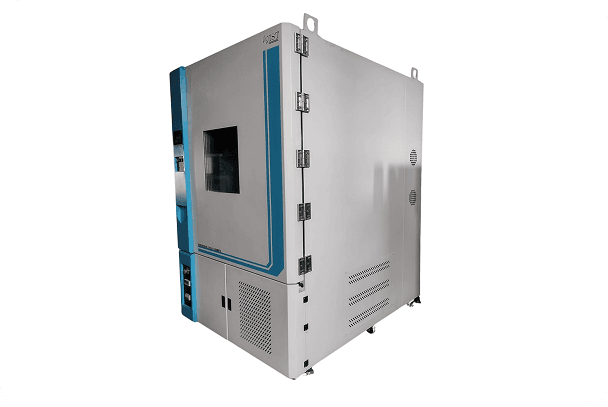
What is a Thermal Vacuum Chamber?
A Thermal Vacuum Chamber (TVC) creates a high-vacuum environment while cycling temperatures to replicate on-orbit conditions. By combining cryogenic shrouds, thermal platens, and precise control, a TVC validates flight hardware for survivability, performance, and outgassing compliance—exactly what a space simulation vacuum chamber or thermal vacuum testing chamber must achieve.
Thermal Vacuum Testing for Aerospace and Space Systems
Thermal vacuum (TVAC) testing exposes flight hardware to vacuum and controlled hot and cold cycles before launch. Jetsys Defence chambers are built for the test types that space programmes run most often:
- Thermal cycling for qualification and acceptance campaigns, using programmable ramps and soaks
- Thermal balance tests carried out before spacecraft integration
- Vacuum bake-out to drive off volatiles and contaminants before spacecraft integration
- Functional testing and burn-in of space electronics, optics and mechanisms under vacuum
Chamber Configurations
Each chamber is configured to the test article. Chambers are available in cylindrical or rectangular formats, from benchtop units and smallsat test benches to large, field-constructed integration chambers. Options include an LN₂ cryo-shroud, heated and cooled platens, IR sun-simulation, payload carts, and electrical, RF, fibre-optic and fluid feedthroughs. Final specifications are set by test article size, thermal load and cleanliness class.
Key System Features
- High Vacuum Performance Pumping architecture engineered to achieve high-vacuum levels suitable for space simulation and bake-out workflows.
- Wide Thermal Envelope Cryo-shrouds and heated platens provide deep-cold to high-temperature profiles with programmable ramps and soaks.
- Uniform Thermal Radiation Multi-zone shrouds and emissivity-controlled liners ensure stable, repeatable heat flux to the test article.
- Flexible Chamber Geometry Available in cylindrical or rectangular formats, from benchtop to field-constructed sizes with payload carts and vibration-safe mounts.
- Clean, Low-Outgassing Build UHV-compatible seals, surface finishes, and vacuum-rated cabling protect optics and sensitive electronics.
- Data & Controls Integrated HMI/SCADA, recipe control, alarms, historian logs, and DAQ for thermocouples, RTDs and vacuum pressure.
- Feedthrough-Rich Interfaces Electrical, fiber-optic, RF and fluid feedthroughs with configurable panels and blanking flanges.
- Serviceability & AMC Indigenized sub-assemblies, local spares and preventive maintenance plans ensure high uptime and lower lifecycle cost.
Benefits of Thermal Vacuum Chamber (TVC)
- Flight-Like Confidence Validates thermal balance, survivability and functional performance before spacecraft integration.
- Lower Program Risk Identifies thermal design gaps, vacuum leaks, contamination risks and component drift early in the cycle.
- Repeatability at Scale Recipe-driven cycles, high sensor density and automation provide consistent, auditable results.
- Cost & Lead-Time Advantage Indigenized build, local support and rapid spare availability reduce total cost of ownership.
- Clean, Safe Operations Low-outgassing interiors, efficient pumping and fume-safe heating ensure a clean test environment.
Technical Specifications – Thermal Vacuum Chamber
| Parameter | Specification |
|---|---|
| Vacuum Level | High vacuum capability (typ. ≤ 1×10⁻⁶ torr class), vacuum gauges & RGA (optional) |
| Temperature Range | Approx. −185 °C to +165 °C (shroud); platen options up to +200 °C (config-dependent) |
| Thermal Hardware | LN₂ cryo-shroud, multi-zone radiant panels, heated/cooled platen, sun-sim IR (optional) |
| Control & DAQ | PLC/HMI with recipe control, alarms, historian; multi-channel thermocouples/RTDs; pressure logging |
| Uniformity | Multi-zone control with validated gradients; emissivity-tuned surfaces for stable radiation |
| Chamber Geometry | Cylindrical or rectangular; benchtop to large field-constructed systems |
| Feedthroughs | Electrical (low/high-power), RF, fiber-optic, fluid/gas, viewports; configurable bulkheads |
| Clean Build | Low-outgassing materials, vacuum-rated cabling, cleanable liners; contamination monitoring (optional) |
| Pumping Train | Dry scroll/roots + turbomolecular/cryopumps; isolation valves, burst discs, safety interlocks |
| Safety & Interlocks | Door locks, e-stops, vacuum/temperature permissives, over-temp/over-pressure protection |
| Utilities | LN₂ supply, GN₂ purge, power as per site; chiller (if configured) |
| Documentation | IQ/OQ protocols, calibration certificates, FAT/SAT reports, operator & maintenance manuals |
| Services | Installation, training, AMC/PMC, calibration & on-site service across India |
Note: Ranges are indicative; final specs are tailored per test article size, thermal load and cleanliness class.
Applications of Thermal Vacuum Chamber (TVC)
- Satellite Subsystems & Payloads Qualification for avionics, power systems, structures, mechanisms, optics and sensors.
- Space Electronics & Materials Functional tests, burn-in, survivability analysis and coating performance studies.
- Vacuum Bake-Out & Contamination Control Drive off volatiles and contaminants prior to spacecraft integration.
- Thermal Cycling & Balance Tests Used for qualification and acceptance campaigns with programmable profiles.
- Optical Assemblies Evaluate stray light behavior, alignment stability and thermal drift.
Why Jetsys Defence for Thermal Vacuum Chambers
- Aerospace-Grade Engineering, Made in India Localized design with faster lead times and reduced lifecycle cost—delivering space-class performance without import delays.
- Through-Lifecycle Support Factory acceptance, commissioning, operator training, calibration, and rapid-response AMC to keep test campaigns on schedule.
- Customization that Fits Your Mission From smallsat test benches to large integration chambers with IR sun-sim, cold plates, payload carts and high-density DAQ.
Frequently Asked Questions
What is TVAC testing?
TVAC (thermal vacuum) testing places hardware in a high-vacuum chamber and cycles its temperature to replicate on-orbit conditions. It is used to check survivability, functional performance and outgassing before the hardware flies.
What vacuum and temperature range do the chambers cover?
Typical systems are in the 1×10⁻⁶ torr class, with a shroud range of approximately −185 °C to +165 °C and platen options up to +200 °C. These ranges are indicative and depend on the configuration.
What chamber sizes are available?
Chambers range from benchtop units and smallsat test benches to large, field-constructed integration chambers, in cylindrical or rectangular formats.
Can the chamber be used for vacuum bake-out?
Yes. Vacuum bake-out and contamination control are standard applications, supported by low-outgassing materials and cleanable liners.
What support is provided after delivery?
Installation, operator training, calibration, AMC/PMC and on-site service are available across India, with documentation that includes IQ/OQ protocols and FAT/SAT reports.
Related Test Systems
The thermal vacuum chamber is one of the indigenized test systems built by Jetsys Defence.
Powered by Dynsimulation Technologies pvt ltd
© Jetsys Defence